Natural Resources and Their Use
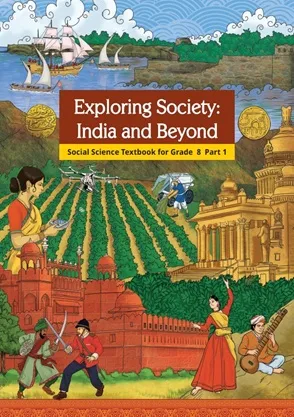
Chapter 1 of the Class 8 Social Science NCERT textbook (Exploring Society: India and Beyond), "Natural Resources", covers materials and substances that occur in Nature and are valuable to humans. They are classified as renewable (solar energy, wind, flowing water, timber) or non-renewable (coal, petroleum, iron, copper, gold), and their uneven distribution shapes trade, settlements, and conflicts.
- 1An entity from Nature becomes a resource only when it is technologically accessible, economically feasible, and culturally acceptable.
- 2Resources are categorised by use: essential for life (air, water, soil), sources of materials (wood, marble, coal, gold), and sources of energy (coal, petroleum, natural gas, sunlight, wind).
- 3Renewable resources such as solar energy, wind, flowing water, and timber can regenerate if harvested at a sustainable rate; over-harvesting can turn them effectively non-renewable.
- 4Non-renewable resources—coal, petroleum, iron, copper, and gold—are formed over long periods and cannot be replenished at the rate of use; India's coal reserves are estimated to last about 50 more years.
- 5Natural resources are unevenly distributed, shaping settlements, trade, and conflicts; Kaveri River water-sharing among Karnataka, Tamil Nadu, Kerala, and Puducherry is one example.